How Many Hours a Week Should a Gymnast Train?
Recreational vs Competitive Gymnastics
One of the most common questions parents and gymnasts ask is:
“How many hours a week should a gymnast train?”
The answer depends on one key factor:
👉 Is the gymnast recreational or competitive?
These two paths have very different goals, expectations, and training needs.
PART 1: Recreational Gymnastics Training Hours
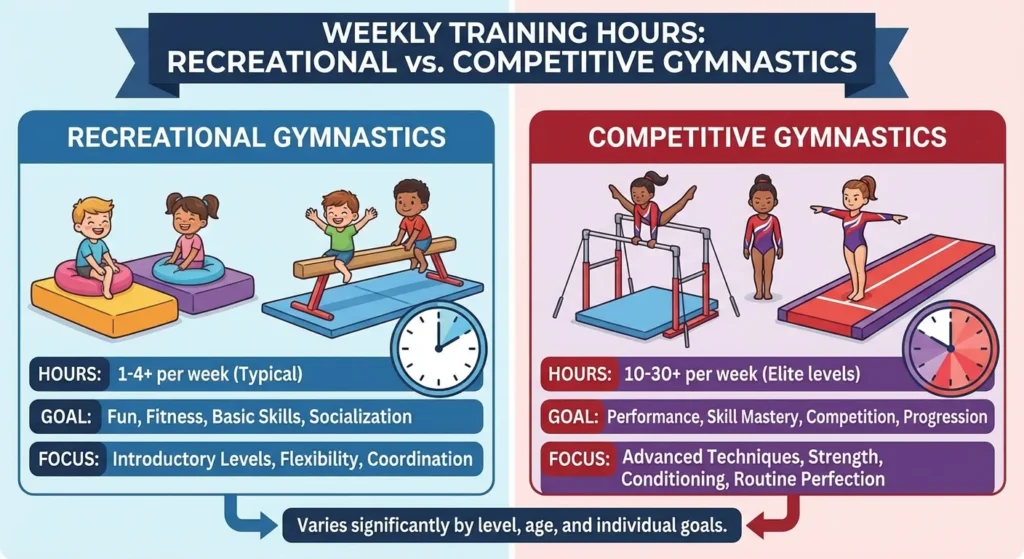
What Is Recreational Gymnastics?
Recreational gymnastics is designed for:
Fun and fitness
Learning basic skills
Building confidence and coordination
No pressure to compete
This path is ideal for beginners and gymnasts who enjoy the sport without elite ambitions.
Recommended Training Hours (Recreational)
🤸 Beginner (Ages 3–12)
1–2 hours per week
Focus:
Balance, coordination
Basic movement patterns
Enjoyment and confidence
🤸 Intermediate (Ages 6–12)
2–4 hours per week
Focus:
Fundamental skills (rolls, handstands, cartwheels)
Flexibility basics
Safe landing mechanics
🤸 Advanced (Ages 6–12)
3–6 hours per week
Focus:
Skill combinations
Strength foundations
Proper technique
At this stage, many gymnasts either remain recreational or transition toward pre-team.
Benefits of Recreational Training
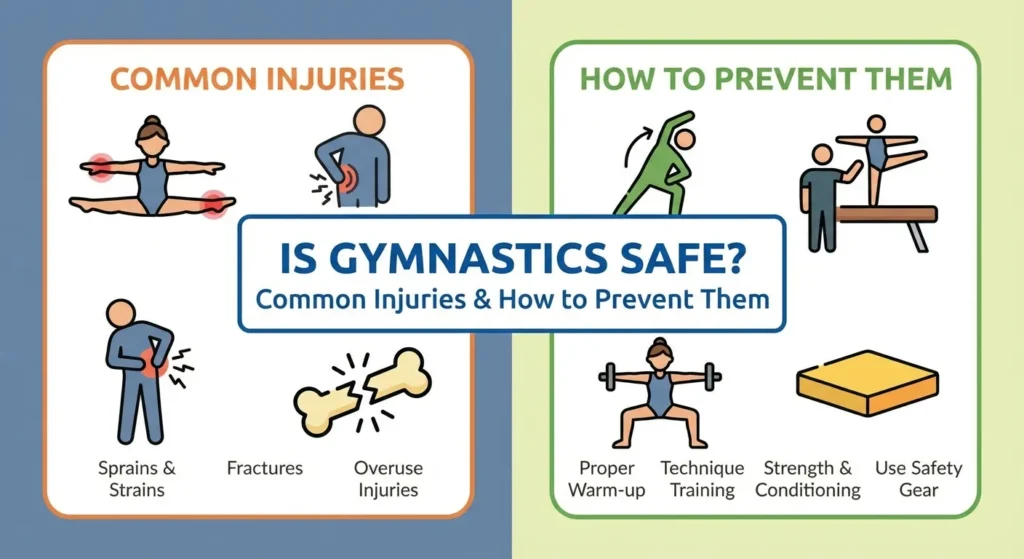
✔ Lower injury risk
✔ Strong physical foundation
✔ Time for school and other activities
✔ Less burnout
Recreational gymnastics should support a child’s development, not dominate their life.
Common Mistake in Recreational Programs
❌ Training too many hours without clear structure
❌ No tracking of skills or progress
❌ No guidance for safe home practice
PART 2: Competitive Gymnastics Training Hours
What Is Competitive Gymnastics?
Competitive gymnastics focuses on:
Skill mastery
Routine preparation
Strength, flexibility, and endurance
Performance under pressure
This path requires commitment, structure, and recovery planning.
Recommended Training Hours (Competitive)
🏆 Ages 5–7 (Pre-Team / Development)
4–8 hours per week
Focus:
Strong basics
Body shaping
Strength fundamentals
🏆 Ages 6–8 (Early Competitive Levels)
8–12 hours per week
Focus:
Skill progressions
Routine components
Conditioning
🏆 Ages 7–11 (Intermediate Competitive)
12–18 hours per week
Focus:
Full routines
Strength & endurance
Injury prevention
🥇 Ages 12+ (Advanced / Elite)
16–25+ hours per week
Focus:
Performance consistency
Mental training
Peak conditioning and recovery
Risks of Overtraining in Competitive Gymnastics
⚠️ Chronic fatigue
⚠️ Repetitive stress injuries
⚠️ Mental burnout
⚠️ Loss of motivation
Training more hours without recovery often slows progress instead of accelerating it.
Quality vs Quantity (Critical at Competitive Levels)
A smart competitive program includes:
Planned weekly load
Strength & flexibility tracking
Deload weeks
Rest days
More hours only work when every hour has a purpose.
Final Takeaway
Recreational and competitive gymnastics are not the same sport in terms of time commitment.
✔ Recreational gymnastics = balance and enjoyment
✔ Competitive gymnastics = structure and progression
The right number of hours is the one that keeps the gymnast:
Improving
Healthy
Motivated