Gymnastics Levels Explained (USAG, Xcel, FIG)
If you’re new to gymnastics, the level system can feel confusing fast. Parents hear terms like “Level 4,” “Gold,” or “FIG junior elite” — and suddenly it sounds like a different language.
Understanding how gymnastics levels work is essential if your child wants to compete — or if you’re planning your gymnastics blog, training program, or product around competitive athletes in the U.S.
Let’s break it down clearly.
 What Is USA Gymnastics (USAG)?
USA Gymnastics (USAG) is the official governing body for gymnastics in the United States. It sets:
-
Competition rules
-
Skill requirements
-
Scoring standards
-
Safety guidelines
Under USAG, there are two main competitive tracks:
-
Development Program (DP) – formerly called JO (Junior Olympic)
-
Xcel Program
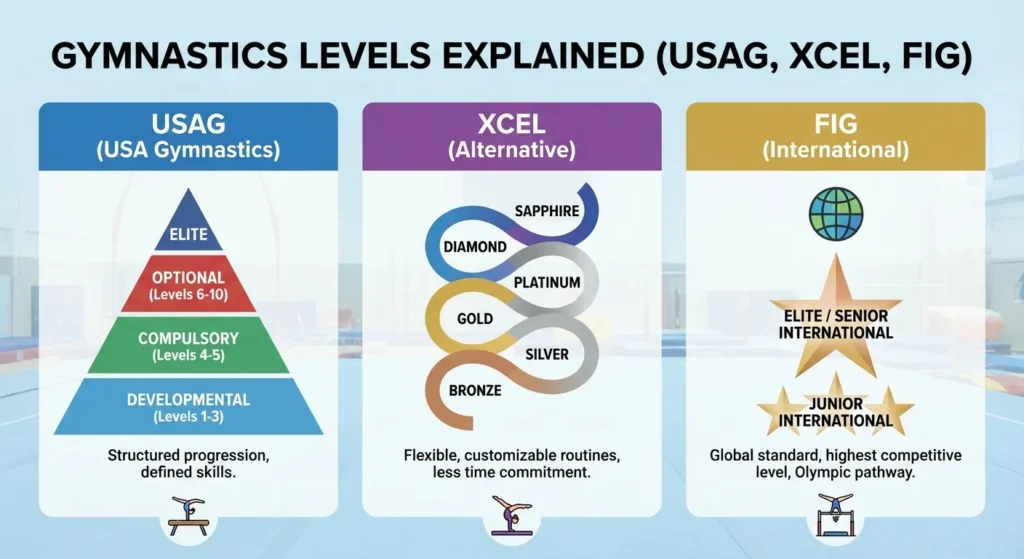
The USAG Development Program (DP)
This is the traditional competitive path. It is more structured and strict.
 Levels 1–3 (Non-Compulsory / In-House)
-
Basic beginner skills
-
Often practiced inside the gym
-
Foundation building
Levels 4–5 (Compulsory)
-
Every gymnast performs the exact same routine
-
Judges score execution only
-
Strong focus on basics
Levels 6–10 (Optional)
-
Gymnasts create their own routines
-
Must meet skill requirements
-
More flexibility and difficulty increases
Level 10 is the highest level before elite.
The Xcel Program (Bronze → Diamond)
The Xcel program is designed to be:
-
More flexible
-
Less time-intensive
-
More affordable for many families
Levels:
-
Bronze
-
Silver
-
Gold
-
Platinum
-
Diamond
Xcel allows gymnasts to compete without the extreme time commitment required in higher DP levels. Many athletes choose Xcel for balance between school, other sports, and gymnastics.
What Is Fédération Internationale de Gymnastique (FIG)?
FIG is the international governing body for gymnastics worldwide.
They control:
-
The Olympic Code of Points
-
World Championships
-
International elite standards
When you hear about the Olympics or World Championships, those athletes compete under FIG rules.
Some well-known FIG competitions include:
-
World Artistic Gymnastics Championships
-
Summer Olympic Games
Elite gymnasts in the U.S. must qualify through USAG and then compete under FIG rules internationally.
What Is “Elite” Gymnastics?
Elite is above Level 10.
This is the path taken by athletes like:
-
Simone Biles
-
Sunisa Lee
Elite gymnastics requires:
-
Very high difficulty
-
Intense training (25–35+ hours per week)
-
National qualification scores
Not every gymnast needs to pursue elite to be successful. Many athletes stay Level 10 and earn college scholarships.
Which Path Is Right for Your Child?
Here’s a simple breakdown:
| Goal | Recommended Path |
|---|---|
| Recreational fun | Xcel Bronze/Silver |
| Moderate competition | Xcel Gold–Diamond |
| Serious competition | DP Level 4–10 |
| College gymnastics | Level 9–10 |
| Olympics dream | Elite (FIG pathway) |
Important: Progression depends on skill mastery, not age alone.
Common Parent Questions
 Is Xcel easier than DP?
Generally, yes. It allows more flexibility in routine composition and training hours.
Can a gymnast switch between DP and Xcel?
Yes — depending on the gym and coach.
Does starting later mean no elite path?
Not necessarily — but elite typically requires early specialization.
Final Thoughts
Gymnastics levels aren’t just numbers — they represent commitment, progression, and opportunity.
Whether your child dreams of the Olympics or just loves flipping on bars, understanding the structure of gymnastics levels helps you make smart decisions.
And if you’re building a gymnastics blog or brand, content like this builds trust — because confused parents are searching for clear answers every single day.