How to Prevent Injuries in Gymnastics
Gymnastics is one of the most exciting and physically demanding sports in the world. Athletes develop strength, flexibility, coordination, and confidence while learning incredible skills on the floor, bars, beam, and vault. However, because gymnastics involves flips, landings, and high-impact movements, injuries can happen if athletes are not careful.
The good news is that most gymnastics injuries are preventable with proper training habits, conditioning, and safety awareness. Whether you are a beginner gymnast, a parent, or a coach, understanding how to reduce injury risk is essential for long-term success and enjoyment in the sport.
In this guide, we’ll explore the most effective ways to prevent injuries in gymnastics and keep athletes training safely.
Why Injury Prevention Matters in Gymnastics
Gymnastics places unique demands on the body. Athletes must combine strength, balance, flexibility, and explosive power in a single routine. Because of this, common injuries often occur in the:
Wrists
Ankles
Knees
Lower back
Shoulders
Many of these injuries develop from overuse, improper technique, or insufficient preparation before training.
Preventing injuries is not just about avoiding pain. It also helps gymnasts:
Progress faster
Train consistently
Maintain confidence
Avoid long recovery periods
Smart training habits allow gymnasts to improve their skills while protecting their bodies.
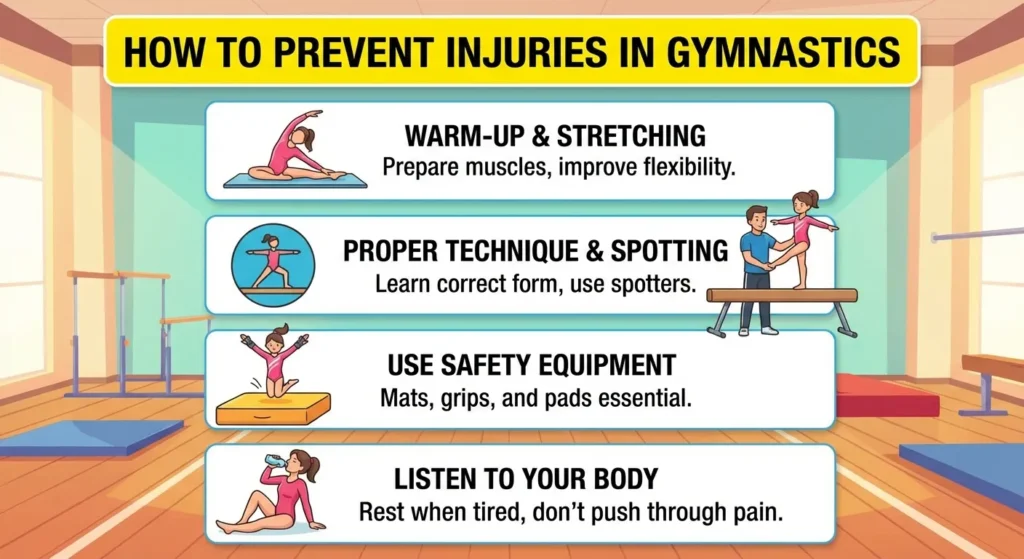
1. Always Start With a Proper Warm-Up
One of the biggest mistakes young gymnasts make is skipping warm-ups. Cold muscles are more likely to tear or strain.
A proper warm-up should last 10–15 minutes and include:
Light cardio (jump rope, jogging, or jumping jacks)
Dynamic stretching
Joint mobility exercises
Basic conditioning drills
Examples of warm-up exercises include:
Arm circles
Leg swings
Hollow body holds
Light tumbling drills
These movements prepare muscles and joints for the intense work ahead.
2. Focus on Proper Technique
Learning correct technique is one of the most important injury prevention strategies in gymnastics.
Trying skills before mastering the fundamentals often leads to falls or bad landings.
Gymnasts should always:
Learn skills progressively
Use proper spotting from a coach
Practice drills before attempting full skills
Avoid rushing to advanced moves
For example, before attempting back handsprings, gymnasts should first master:
Bridges
Kickovers
Handstands
Back walkovers
Strong basics build a safe foundation for advanced gymnastics.
3. Build Strength and Conditioning
Gymnastics requires full-body strength. Weak muscles increase the risk of injury because joints must absorb more stress.
Conditioning should be part of every training session.
Important strength areas include:
Core Strength
A strong core protects the lower back and improves balance.
Core exercises:
Planks
Hollow holds
Leg lifts
V-ups
Upper Body Strength
Upper body strength supports skills on bars and rings.
Exercises include:
Push-ups
Pull-ups
Handstand holds
Rope climbs
Leg Strength
Strong legs protect knees and ankles during landings.
Exercises include:
Squats
Lunges
Box jumps
Calf raises
Consistent conditioning makes gymnastics safer and improves performance.
4. Improve Flexibility Safely
Flexibility is essential in gymnastics, but stretching incorrectly can cause injuries.
Gymnasts should avoid forcing splits or overstretching cold muscles.
Safe flexibility habits include:
Stretching after warm-ups
Holding stretches for 20–30 seconds
Progressing slowly
Avoiding pain during stretching
Key flexibility areas:
Hamstrings
Hip flexors
Shoulders
Back
Controlled flexibility training improves range of motion without damaging muscles.
5. Use Proper Equipment and Mats
Training in a safe environment dramatically reduces injury risk.
Gymnasts should always practice skills with appropriate equipment such as:
Landing mats
Foam pits
Spotting belts
Balance beam padding
Beginners should never attempt difficult skills on hard surfaces without proper protection.
Gyms also regularly inspect equipment to ensure it is stable and safe.
6. Listen to Your Body
Pain is the body’s warning signal.
Many injuries become serious because athletes ignore small pains and continue training.
Signs a gymnast should rest include:
Persistent wrist pain
Swelling in joints
Sharp pain during landings
Limited range of motion
Rest days are essential for muscle recovery and injury prevention.
Gymnasts should always communicate with their coaches and parents if something feels wrong.
7. Avoid Overtraining
Training too many hours without recovery increases injury risk.
Young gymnasts especially need balanced schedules that include:
Rest days
Sleep
Proper nutrition
Cross-training activities
Typical training recommendations:
Recreational gymnasts: 2–6 hours per week
Competitive gymnasts: 10–25+ hours depending on level
Recovery allows muscles and joints to rebuild stronger.
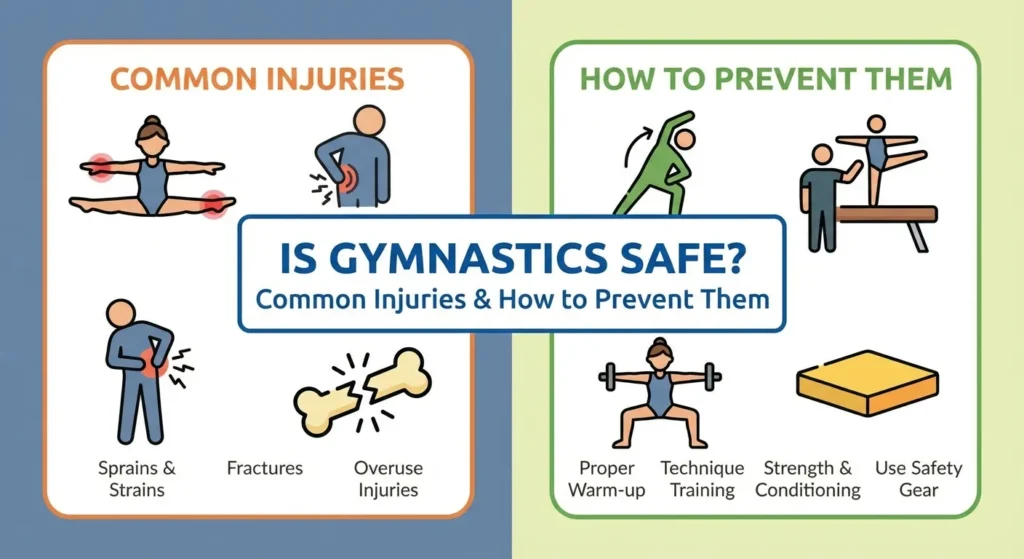
Common Gymnastics Injuries (and How to Avoid Them)
Some of the most common injuries include:
Wrist Injuries
Cause: repetitive impact during tumbling
Prevention: wrist strengthening and proper technique
Ankle Sprains
Cause: bad landings from jumps or tumbling
Prevention: strong leg muscles and soft landings
Lower Back Pain
Cause: excessive back flexibility without core strength
Prevention: strong core conditioning
Shoulder Strains
Cause: overuse on bars
Prevention: shoulder stability exercises
Understanding these risks helps gymnasts train smarter.
Final Thoughts
Gymnastics injuries are not inevitable. With the right habits, most can be prevented.
The key principles include:
Always warm up properly
Build strength and flexibility gradually
Learn correct technique
Use safe equipment
Allow time for recovery
By focusing on safety and smart training, gymnasts can enjoy the sport, progress faster, and build a strong foundation for long-term athletic success.
Gymnastics should challenge the body—but it should never put it at unnecessary risk.