Gymnastics for Beginners: Complete Start Guide
Starting gymnastics can feel exciting… and intimidating.
You see athletes flipping, balancing, and flying through the air — and you wonder:
“Where do I even begin?”
The truth? Every elite gymnast — from Olympians like Simone Biles to world champions like Kohei Uchimura — started with the exact same basics you’re about to learn.
This complete beginner guide will walk you step-by-step through everything you need to know before starting gymnastics — safely, confidently, and with a clear plan.
Is Gymnastics Good for Beginners?
Yes — and it’s one of the best foundation sports in the world.
Gymnastics builds:
Full-body strength
Flexibility
Coordination
Balance
Discipline
Confidence
It’s often called the “mother of all sports” because it develops athletic ability that transfers to almost any other activity.
And no — you do NOT need to be flexible or strong before starting. That’s what training is for.
What Type of Gymnastics Should You Start With?
For beginners, the most common options are:
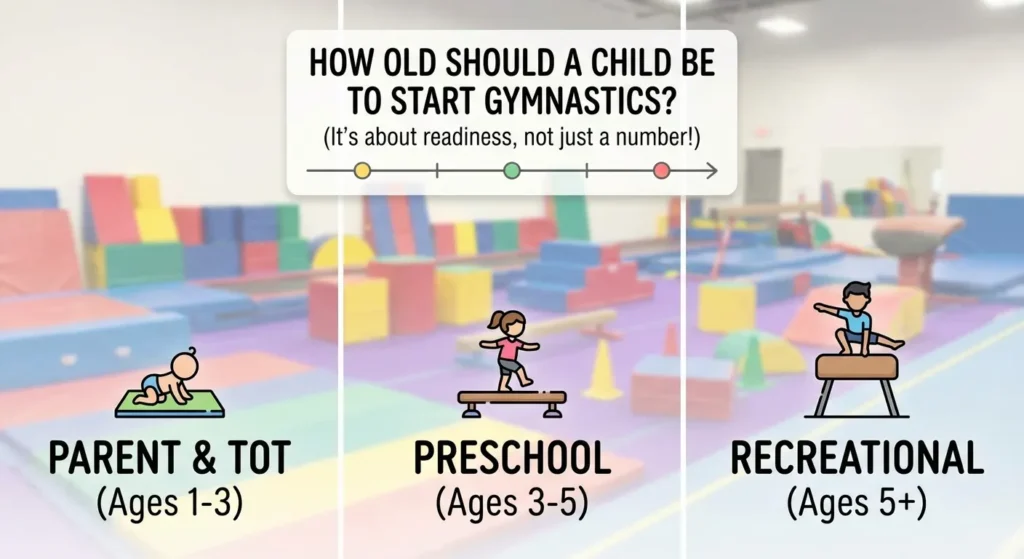
1. Recreational Gymnastics
Best for:
Kids
Teens
Adults starting for fitness
Anyone training 1–3 times per week
Focus: Basic skills, fun, coordination, general strength.
2. Artistic Gymnastics
The Olympic-style gymnastics seen at the Olympic Games.
Women compete on:
Vault
Uneven Bars
Balance Beam
Floor
Men compete on:
Floor
Pommel Horse
Rings
Vault
Parallel Bars
High Bar
This path is more structured and competitive.
What Skills Do Beginners Learn First?
You don’t start with flips.
You start with foundations:
Floor Basics
Forward roll
Backward roll
Cartwheel
Handstand (against wall first)
Bridge
Strength Foundations
Hollow hold
Plank
Push-ups
Leg lifts
Pull-up progressions
Flexibility Work
Splits progression
Shoulder mobility
Back flexibility
These basics build the strength and control required for advanced skills later.
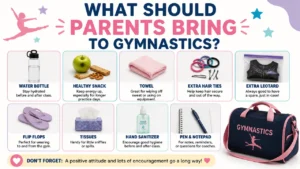
What Equipment Do You Need?
For a gym:
Comfortable athletic clothes
Bare feet or gymnastics shoes
Hair tied back
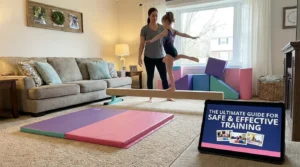
For home practice (optional):
Gymnastics mat
Resistance bands
Pull-up bar
You do NOT need expensive equipment to start.
How Often Should Beginners Train?
Recreational beginners:
2–3 times per week
Adults starting at home:
3 short sessions per week (30–45 minutes)
Consistency matters more than intensity.
Is Gymnastics Hard for Beginners?
Yes — but in a good way.
You’ll feel:
Sore muscles
Frustration when learning handstands
Slow progress at first
But here’s the secret:
Gymnastics progress is invisible before it’s visible.
Your strength builds quietly.
Your coordination improves slowly.
Then one day — your first clean cartwheel feels effortless.
Common Beginner Mistakes
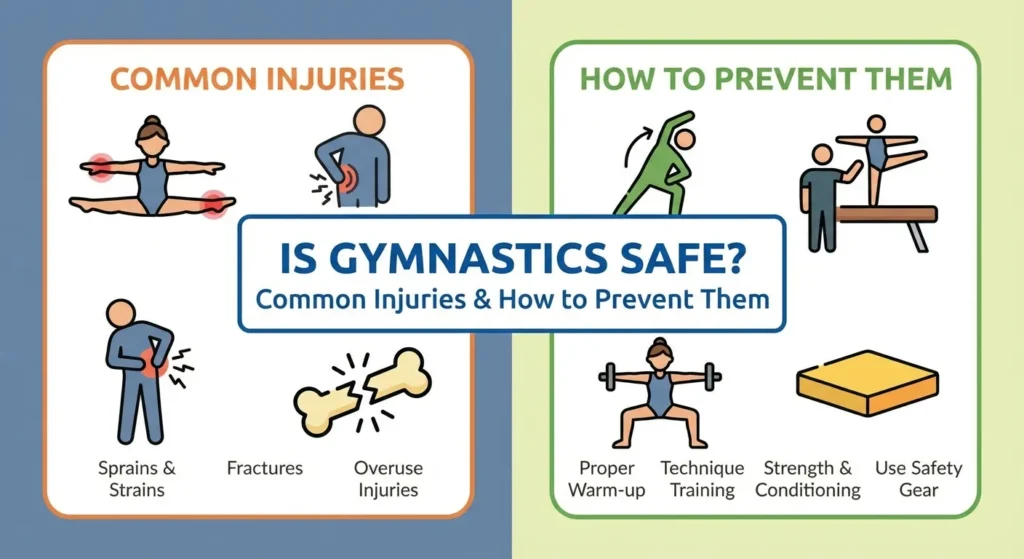
Skipping warm-ups
Trying advanced skills too early
Comparing yourself to advanced athletes
Ignoring flexibility training
Inconsistent practice
Gymnastics rewards patience.
Beginner Weekly Sample Plan
Day 1 – Strength + Rolls
Warm-up (5–10 min)
Hollow hold 3×20 sec
Plank 3×30 sec
Forward/backward rolls
Stretching
Day 2 – Handstand Focus
Wrist warm-up
Wall handstand holds
Shoulder taps progression
Bridge work
Day 3 – Cartwheel + Flexibility
Cartwheel drills
Split stretches
Core finisher
How Long Before You See Progress?
Most beginners notice:
Better flexibility: 3–4 weeks
Stronger core: 4–6 weeks
Cleaner skills: 2–3 months
Advanced skills like back handsprings can take 6–12+ months depending on training frequency.
Final Thoughts
Gymnastics isn’t about flipping.
It’s about control.
Discipline.
Mastery of your own body.
Everyone starts at zero.
And the only difference between a beginner and an advanced gymnast…
is time and consistency.