Best Age to Start Gymnastics (With Realistic Expectations for Parents)
Parents hear wildly different advice about gymnastics.
Some say “start at 3 or it’s too late.” Others say “wait until 8 so they don’t burn out.”
So what’s the real best age to start gymnastics?
The honest answer: it depends on the goal — fun, fitness, or elite competition.
Let’s break it down clearly, without hype or pressure.
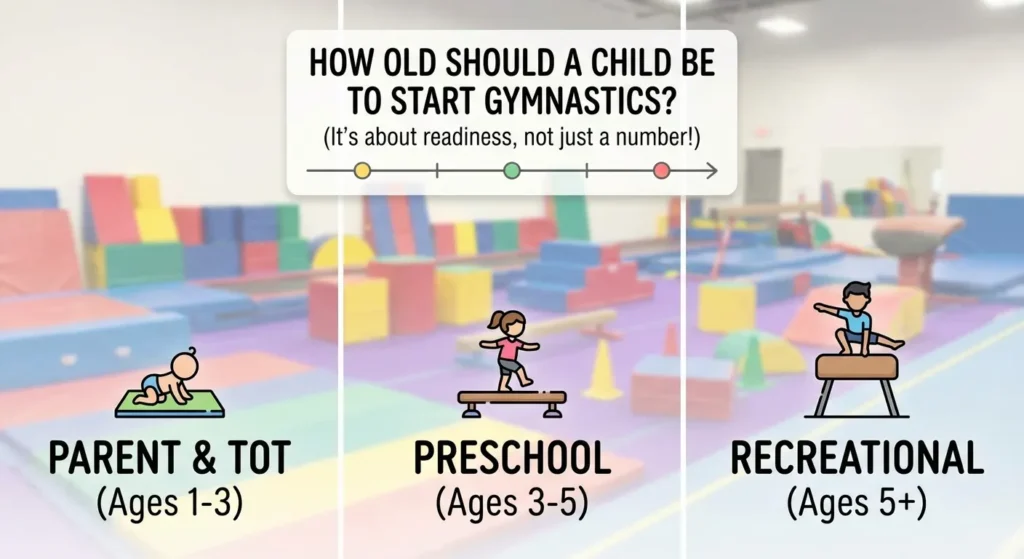
Ages 2–3: Introduction & Movement Play (Not “Real” Gymnastics)
At this age, gymnastics is about:
Balance
Coordination
Body awareness
Listening and following simple instructions
What to Expect
✔ Parent-and-tot classes
✔ Rolling, jumping, hanging, obstacle courses
❌ No skills, no routines, no competition
Is this required for future success?
No. Kids who start later are not behind.
Best for: confidence, fun, and early motor development.
Ages 4–5: The Ideal Beginner Window
This is one of the best ages to start gymnastics for most children.
Why This Age Works So Well
Kids can focus longer
They understand instructions
They’re excited to learn skills
Less fear than older beginners
Skills Usually Introduced
Forward rolls
Cartwheels
Hanging on bars
Basic jumps and balances
Reality check:
Most children at this age will not become competitive gymnasts — and that’s perfectly fine.
Best for: strong foundations + positive first experience.
Ages 6–8: Still a Great Time to Start (Yes, Really)
Many parents worry that starting at 7 or 8 is “too late.”
It’s not.
What Changes at This Age
Faster learning
Better strength development
More emotional maturity
Kids starting at 6–8 often progress very quickly, especially if they:
Enjoy training
Attend 2–3 classes per week
Have supportive (not pushy) parents
Competitive gymnastics is still possible, especially at smaller or regional levels.
Ages 9–12: Late Start, Different Path
Starting gymnastics at this age usually means:
Recreational focus
Tumbling
Xcel or adult-path programs
Cross-training for cheer, dance, or sports
Honest Expectations
Elite Olympic paths are unlikely
Skill progress can still be impressive
Confidence and athleticism grow fast
Best for: fitness, flexibility, discipline, and self-esteem.
The Truth About Elite Gymnastics
If your child dreams of elite or college gymnastics, the typical start age is:
👉 4–6 years old
But here’s the part many blogs don’t say:
⚠ Early start does not guarantee success
⚠ Late start does not mean failure
⚠ Burnout is more common than elite success
The best gymnasts are not just early starters — they are:
Emotionally supported
Well-coached
Injury-aware
Allowed to enjoy childhood
Signs Your Child Is Ready (Any Age)
Instead of focusing only on age, look for:
Enjoyment of movement
Ability to listen and follow rules
Curiosity about learning skills
Smiling after class (very important!)
If your child cries every class, refuses to participate, or feels pressured — pause and reassess.
Common Parent Mistakes to Avoid
🚫 Comparing your child to others
🚫 Chasing levels and medals too early
🚫 Adding extra hours too fast
🚫 Ignoring fear, pain, or burnout signs
Gymnastics should build confidence, not anxiety.
Final Thoughts
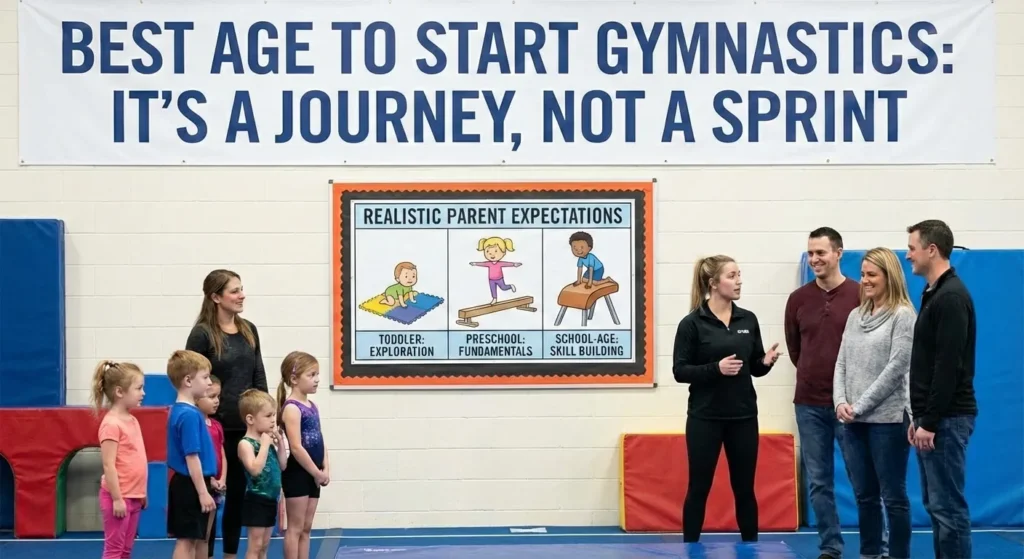
The best age to start gymnastics isn’t about chasing medals.
It’s about finding the moment when your child can enjoy movement, learn safely, and grow with confidence.
A happy gymnast always beats an early one.