Is Gymnastics Safe? Common Injuries & How to Prevent Them
Gymnastics is one of the most impressive sports in the world. Strength, flexibility, coordination, confidence — it builds all of it.
But let’s be honest: when parents see flips, handstands, and balance beams, the first question is always the same:
“Is gymnastics safe?”
The short answer: Yes — when it’s taught correctly and safely.
The long answer depends on training habits, coaching quality, recovery, and injury prevention.
Let’s break it down.
Is Gymnastics a Dangerous Sport?
Gymnastics looks risky, but statistically, it’s no more dangerous than many popular youth sports like soccer, basketball, or cheerleading.
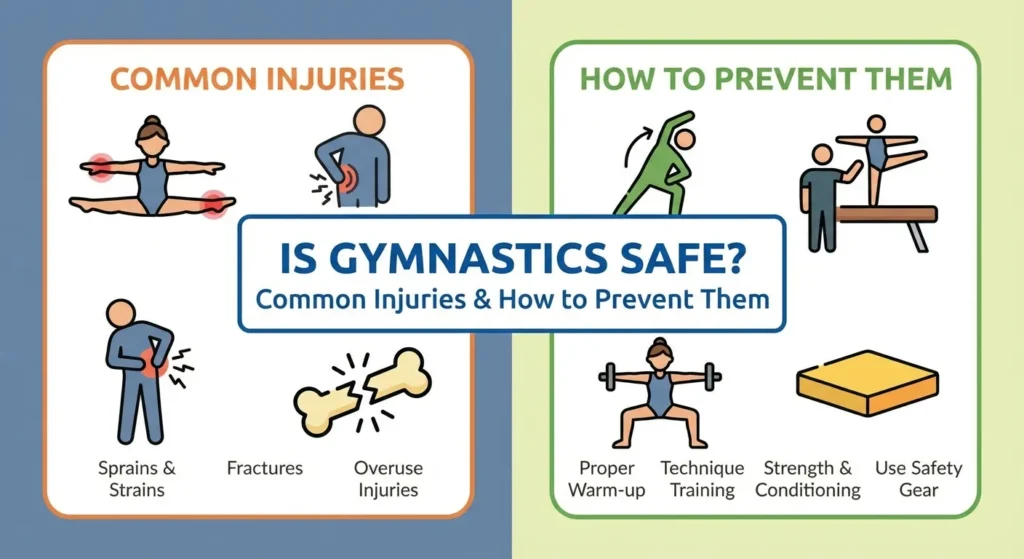
Most injuries in gymnastics are:
Overuse injuries
Preventable
Caused by poor technique, rushed progress, or lack of recovery
Serious injuries are rare — especially at the beginner and recreational levels.
The Most Common Gymnastics Injuries
Understanding common injuries helps prevent them before they happen.
1. Wrist Injuries
Why it happens:
Gymnasts put a lot of weight on their hands during handstands, vaults, and floor skills.
Common issues:
Wrist pain
Growth plate irritation (in young gymnasts)
Tendinitis
Prevention:
Proper wrist warm-ups
Gradual load progression
Correct hand placement and technique
2. Ankle & Foot Injuries
Why it happens:
Landing jumps, dismounts, and tumbling skills repeatedly.
Common issues:
Sprains
Stress reactions
Heel pain
Prevention:
Landing mechanics training
Ankle strengthening exercises
Safe mats and surfaces
3. Lower Back Pain
Why it happens:
Back flexibility skills without enough core strength.
Common issues:
Muscle strain
Overuse pain
Poor posture habits
Prevention:
Core conditioning
Balanced flexibility (not just extreme arches)
Proper coaching corrections
4. Shoulder Injuries
Why it happens:
Swinging on bars, holding body weight upside down.
Common issues:
Shoulder instability
Muscle imbalances
Prevention:
Shoulder stability drills
Strengthening rotator cuff muscles
Avoiding early specialization
Why Most Gymnastics Injuries Are Preventable
Here’s the truth many people don’t talk about:
Gymnastics injuries usually don’t come from one big fall — they come from small mistakes repeated over time.
The biggest risk factors:
Skipping warm-ups
Training too many hours too soon
Poor flexibility-strength balance
No home recovery routine
And this is where parents and gymnasts can make a huge difference.
How to Make Gymnastics Safer (Beginner & Recreational Level)
1. Start Slow
Progression matters more than talent. Skills should be earned, not rushed.
2. Focus on Basics
Strong basics = safer advanced skills later.
3. Warm-Up & Cool-Down Properly
A good warm-up alone can reduce injury risk by 30–50%.
4. Train Smart at Home
Home practice should support training — not add stress or risk.
What Most Gyms Don’t Give You (But You Need)
Most gyms teach skills well — but they don’t provide a clear injury-prevention system for beginners.
Parents are often left wondering:
Is my child training too much?
What stretches are actually safe?
What strength work should beginners do?
How can we prevent injuries at home?
Final Thoughts: Is Gymnastics Safe?
Gymnastics is safe when:
✔ Skills are taught progressively
✔ Strength and flexibility are balanced
✔ Recovery is respected
✔ Injury prevention is part of training — not an afterthought
With the right approach, gymnastics becomes not just safe, but one of the best foundation sports for a child’s body and confidence.